Christian naturism and Christian nudism are sinful and heretical
"heresy" in the sense of promoting error that borders on or implies denial of key doctrines (the persistence of lust, the impact of the Fall from Edenon modesty/shame).
Biblical Contextual Impact on Modesty/Shame
Pre-Fall (Garden of Eden): Nakedness existed without shame; innocence meant no need for covering.
Post-Fall (Expulsion from Garden of Eden): Shame and fear of exposure arose immediately as a consequence of sin (Gen 3:7).
Result: Modesty became a response to the loss of innocence even after Baptism, designed to cover shame and mark the distinction between holy and fallen states.
Resurrection: The Doctrinal reality that human nature remains fallen until the resurrection. According to official Church teaching, while the "fallen" condition (mortality, suffering, and the inclination to sin) persists through earthly life, it is completely overcome when the body and soul are reunited in a glorified state at the end of time.
“sin” because it is either a direct or a near occasion of grievous of sin -
because immodesty contradicts scripture and dishonors God
Scandal results leading people to sin
we are called to purity of heart and immodesty is a cause of lust
In Summary -
Old Testament
From being naked and unashamed, to being afraid of being naked. God makes garments (Genesis 2-3)
Nakedness associated with sin, paganism and lust (Genesis 9, Leviticus 18, 20, Exodus 32)
Clothing is associated with righteousness and splendor (Job 29, Psalm 45, Psalm 104, Isaiah 61)
The Priests of the Tabernacle are given strict clothing requirements to make sure their private parts are not seen (Exodus 20:26, Psalm 132)
The body is confined to marriage (Song of Songs)
King Saul (first King of Israel) is oppressed by a Demon and strips naked signifying loss of Royalty (1 Samuel 19:24)
The Prophets use nakedness to signify shame and national humiliation (2 Chronicles 28, Isaiah 20, Isaiah 47, Jeremiah 13, Ezekiel 16, Lamentations 1, Micah 1)
New Testament
Jesus refers to be clothed with righteousness (Luke 24:49)
The Apostles develop the idea of flesh against spirit (Galatians 5), the flesh is seen as warring against the soul (1 Peter 2)
Further reference to clothing oneself with righteousness (Colossians 3), against the flesh (Romans 13)
Reference to rejecting the natural man and becoming the spiritual man, unpresentable parts of the body treated with special modesty (1 Corinthians 2, 1 Corinthians 12)
The Body is a Temple of the Holy Spirit (1 Corinthians 6)
Jesus and the Apostles warn against scandal (Matthew 18, 1 Corinthians 8)
Jesus warns against being naked when the Day of the Lord arrives, the saved are given robes, fine linen is the righteous deeds of the saints (Revelation 6, 16, 18)

1 Thessalonians 4
3 For it is God’s will that you should be holy: You must abstain from sexual immorality; 4 each of you must know how to control his own body in holiness and honor, 5 not in lustful passion like the Gentiles who do not know God; 6 and no one should ever violate or exploit his brother in this regard, because the Lord will avenge all such acts, as we have already told you and solemnly warned you. 7 For God has not called us to impurity, but to holiness. 8 Anyone, then, who rejects this command does not reject man but God, the very One who gives you His Holy Spirit.
A lifestyle opposed to God
Why Christian Naturism is wrong -
At the beginning of the Bible we have the story of Adam and Eve, our first parents. Now it expressly says they were naked and unashamed (Genesis 2:25).
Yet after the fall they felt shame - Genesis 3:10 “He answered, “I heard you in the garden, and I was afraid because I was naked; so I hid.” 11 And he said, “Who told you that you were naked? Have you eaten from the tree that I commanded you not to eat from?”
When God confronts Adam's shame over his nakedness, He does not say "You shouldn't be ashamed — nakedness is fine." Instead, He links the awareness of nakedness directly to disobedience.
Indeed, God made clothes for them - Genesis 3:21 “The Lord God made garments of skin for Adam and his wife and clothed them”.
From this we have the concept of Original Sin.
The Catechism of the Catholic Church states 418 As a result of original sin, human nature is weakened in its powers, subject to ignorance, suffering and the domination of death, and inclined to sin (this inclination is called "concupiscence").
Baptism of course removes original sin, not its effects
CCC 405 Baptism, by imparting the life of Christ's grace, erases original sin and turns a man back towards God, but the consequences for nature, weakened and inclined to evil, persist in man and summon him to spiritual battle.
Nakedness is no longer just a state of exposure but a symbol of sin's curse. The solution is not a fig leaf but the righteousness of Christ. The prohibition is not merely against an act but against the lustful thought. And the final hope is not a return to innocent nudity but being gloriously and eternally "clothed" in the life of God.
We have mention of the Bible of the flesh lusting against the Spirit
Galatians 5:16 But I say, walk by the Spirit, and you will not gratify the desires of the flesh. 17 For the desires of the flesh are against the Spirit, and the desires of the Spirit are against the flesh, for these are opposed to each other, to keep you from doing the things you want to do. For the flesh desires what is contrary to the Spirit, and the Spirit what is contrary to the flesh. They are in conflict with each other, so that you are not to do whatever you want.
Time and time again we read of the importance of Clothing in the Bible
Romans 13:14 Rather, clothe yourselves with the Lord Jesus Christ, and do not think about how to gratify the desires of the flesh.
Here we read not to indulge in sensual pleasures and indulgence but to be clothed with Jesus Christ who preached chastity and continence. Jesus Christ warns against being naked in the Book of Revelations. Here He warns against us being in a shameful state. Therefore, we can see that putting on Lord Jesus Christ and being with the spirit is directly related to being clothed rather than unclothed.
Revelation 16:15 Behold, I come as a thief. Blessed is he that watcheth, and keepeth his garments, lest he walk naked, and they see his shame.
Revelation 6:11 Then each of them was given a white robe …
Coverings are seen as vital and important for spiritual combat
Ephesians 6:11 Put on the full armor of God, so that you can make your stand against the devil’s schemes.
Covering nakedness is seen as an act of Mercy
Matthew 25:38
37 Then the righteous will answer Him, ‘Lord, when did we see You hungry and feed You, or thirsty and give You something to drink? 38 When did we see You a stranger and take You in, or naked and clothe You?
Indeed, we even see clothing take on a Sacred Dimension
Psalm 132:9
“May your priests be clothed with your righteousness; may your faithful people sing for joy.’”
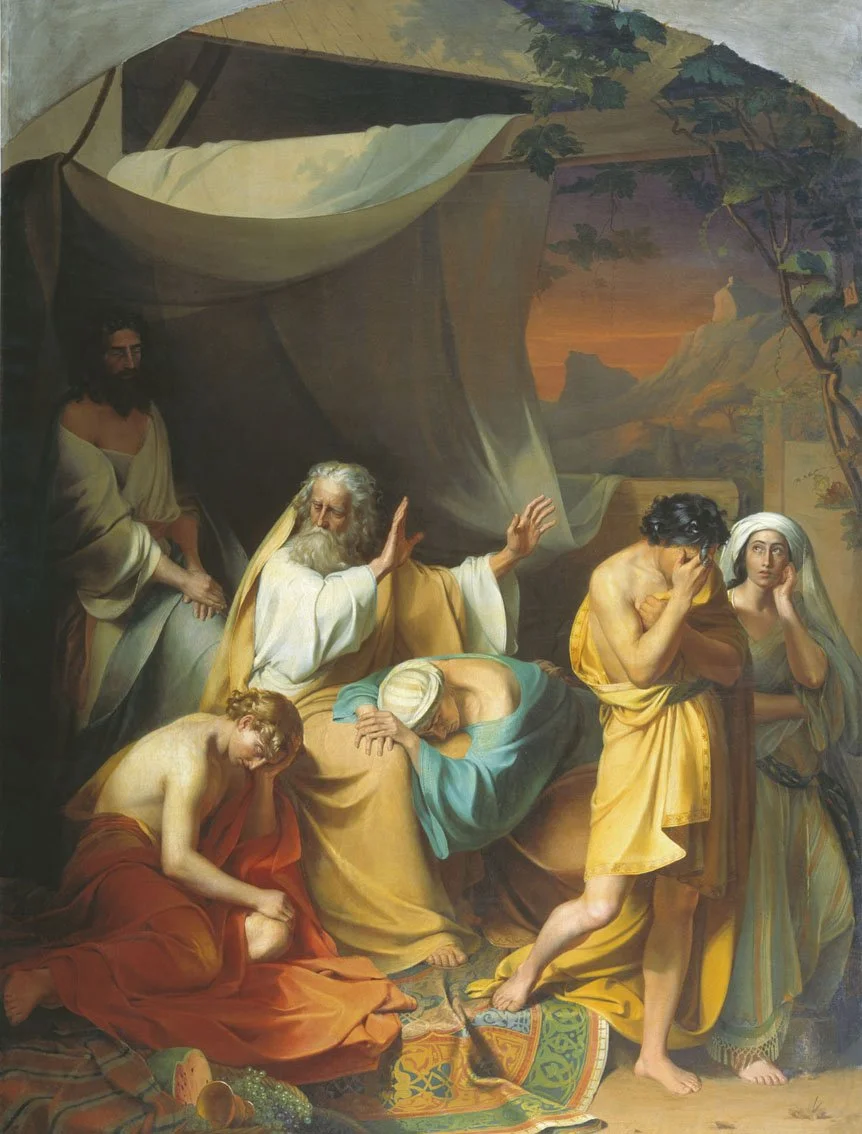
Indeed, there were permanent consequences when Ham saw the nakedness of his father Noah - he was given a strong curse
Genesis 9
Noah’s Shame and Canaan’s Curse
18 The sons of Noah who came out of the ark were Shem, Ham, and Japheth. And Ham was the father of Canaan. 19 These three were the sons of Noah, and from them the whole earth was populated. 20 Now Noah, a man of the soil, proceeded to plant a vineyard. 21 But when he drank some of its wine, he became drunk and uncovered himself inside his tent. 22And Ham, the father of Canaan, saw his father’s nakedness and told his two brothers outside. 23 Then Shem and Japheth took a garment and placed it across their shoulders, and walking backward, they covered their father’s nakedness. Their faces were turned away so that they did not see their father’s nakedness. 24 When Noah awoke from his drunkenness and learned what his youngest son had done to him, 25he said, “Cursed be Canaan! A servant of servants shall he be to his brothers.”
The Principle of Kavod (Honor): Even if one follows the simpler reading—that Ham merely looked and told his brothers— Jewish tradition derive a critical principle. The act of "seeing" was not passive; it was an act of disrespect. By looking upon his father's vulnerability and publicizing it, Ham violated the fundamental commandment to honor one's parents. Shem and Japheth, in contrast, are praised for their extraordinary sensitivity: they "walked backward, and covered the nakedness of their father." Rashi (the preeminent medieval commentator) explains that even turning their faces away was an act of piety. This story becomes the paradigm for the prohibition of ona'at devarim (verbal oppression) and for the importance of shielding others from shame.
Leviticus 18, 20 Uncovering nakedness
The entire legal framework begins with the repeated phrase in Leviticus: "do not uncover (galot) the nakedness (ervah).”
The Talmudic sages in Tractate Sanhedrin 69b-70a engage in a meticulous debate to define what act constitutes this forbidden "uncovering."
The Debate: Is the prohibition against the act of sexual intercourse itself, or is it against seeing the nakedness? The conclusion is that the primary prohibition is against the act of intercourse. However, the sages derive a secondary prohibition from the language of "uncovering": it is also forbidden to gaze upon the ervah of a forbidden relative. This is derived from the verse "None of you shall approach to any that is near of kin to uncover their nakedness" (Leviticus 18:6). The word "approach" (kerovah) is interpreted to mean coming close for the purpose of seeing, not just for the act itself.
The Definition of Ervah: What parts of the body constitute ervah? The Talmud in Berakhot 24a defines it for the purpose of reciting holy words (like the Shema). It states that a man cannot gaze at a woman's "fingerbreadth" of flesh that is normally covered. This includes the thigh, the upper arm, and more. While this specific context is prayer, it establishes a cultural and legal baseline for what is considered immodestly exposed. The Talmudic sages understood ervah not just as the genitals, but as parts of the body that, when exposed, incite lust and destroy personal sanctity (kedushah).
Tzniut (Modesty of Dress and Conduct): The laws dictate that a married woman's hair is considered ervah and must be covered. Clothing must not reveal the form of the body or the parts of the body defined by the sages. This is not about shame of the body itself, but about guarding the sanctity of human interaction and preserving the specialness of intimacy within its proper context. The body is seen as a holy vessel, and its holiness is protected through modesty.
Revelation 7:9-14
“9 After this I looked, and there before me was a great multitude that no one could count, from every nation, tribe, people and language, standing before the throne and before the Lamb. They were wearing white robes and were holding palm branches in their hands.”
Revelation 19:8 Fine linen, bright and clean, was given her to wear.” (Fine linen stands for the righteous acts of God’s holy people.)
Revelation 3:17-18 (to the church in Laodicea) — "For you say, I am rich, I have prospered, and I need nothing, not realizing that you are wretched, pitiable, poor, blind, and naked (gymnos). I counsel you to buy from me... white garments so that you may clothe yourself and the shame of your nakedness (gymnótētos) may not be seen..."
Revelation 3:17 — The Naked Church "...you are wretched, pitiable, poor, blind, and naked."
The church at Laodicea is rebuked for its spiritual complacency. Among its conditions of disgrace is nakedness. The Lord's remedy? "I counsel you to buy from me gold refined by fire... and white garments so that you may clothe yourself and the shame of your nakedness may not be seen" (v.18). Even in eschatological and spiritual language, nakedness = spiritual disgrace, and clothing = righteousness and dignity.
The clothing analogy is used again to put on Jesus Christ - Letting His character, attitudes, virtues, and power shape behavior (similar to "putting on the new self" in Ephesians 4:24 and Colossians 3:10) & treating Jesus as spiritual armor or protection against sin
Galatians 3:27: "For as many of you as were baptized into Christ have put on Christ."
Ephesians 4:21 Surely you heard of Him and were taught in Him—in keeping with the truth that is in Jesus— 22to put off your former way of life, your old self, which is being corrupted by its deceitful desires; 23 to be renewed in the spirit of your minds; 24and to put on the new self, created to be like God in true righteousness and holiness.
And
"I am going to send you what my Father has promised; but stay in the city until you have been clothed with power from on high." (Luke 24:49)
And
Colossians 3:12-15
Therefore, as God’s chosen people, holy and dearly loved, clothe yourselves with compassion, kindness, humility, gentleness and patience.
And
Romans 13:14 Instead, clothe yourselves with the Lord Jesus Christ, and make no provision for the desires of the flesh.
This quote relates to all sensual indulgences
Nudity is seen as something shameful
Isaiah 20:4 so shall the king of Assyria lead away the Egyptians prisoners and the Ethiopians captives, young and old, naked and barefoot, even with their buttocks uncovered, to the shame of Egypt.
And
Ezekiel 16:37
therefore I am going to gather all your lovers, with whom you found pleasure, those you loved as well as those you hated. I will gather them against you from all around and will strip you in front of them, and they will see you stark naked.
And
Ezekiel 22:10 — Nakedness and Social Corruption "In you men uncover their fathers' nakedness; in you they violate women who are unclean in their menstrual impurity."
And
Nahum 3:5 “I am against you,” declares the Lord Almighty.
“I will lift your skirts over your face.
I will show the nations your nakedness
and the kingdoms your shame.
And
Jeremiah 13:22-27
And if you ask yourself, “Why has this happened to me?” It is because of the magnitude of your iniquity that your skirts have been stripped off and your body has been exposed.
And
Lamentations 1:8 Jerusalem has sinned greatly; therefore she has become an object of scorn. All who honored her now despise her, for they have seen her nakedness; she herself groans and turns away.
And
2 Chronicles 28:19 – “For the LORD brought Judah low because of Ahaz king of Israel; for he made Judah naked, and transgressed sore against the LORD.” King Ahaz is condemned for "making Judah naked," used as a metaphor for moral and spiritual degradation.
And
Isaiah 47:3: A taunt against Babylon: "Your nakedness shall be uncovered, and your disgrace shall be seen. I will take vengeance, and I will spare no one."
This again uses nakedness as the ultimate symbol of a fallen, disgraced power.
Now if nudity is of the flesh, the Spirit is seen constantly warring against it
1 Peter 2:11
Beloved, I urge you, as foreigners and exiles, to abstain from the desires of the flesh, which war against your soul.
Romans 8:5-8
Those who live according to the flesh set their minds on the things of the flesh; but those who live according to the Spirit set their minds on the things of the Spirit. / The mind of the flesh is death, but the mind of the Spirit is life and peace, / because the mind of the flesh is hostile to God: It does not submit to God’s law, nor can it do so. ...
Galatians 5:24 Those who belong to Christ Jesus have crucified the flesh with its passions and desires. 25 Since we live by the Spirit, let us keep in step with the Spirit. 26Let us not become conceited, provoking and envying each other.
Matthew 26:41
“Watch and pray so that you will not enter into temptation. For the spirit is willing, but the body is weak.”
Expressly, the natural man is mentioned here
1 Corinthians 2:14
The natural man does not accept the things that come from the Spirit of God. For they are foolishness to him, and he cannot understand them, because they are spiritually discerned.
We are even told parts of our body should not be presented to others
1 Corinthians 12:23 and the parts that we think are less honorable we treat with special honor. And the parts that are unpresentable are treated with special modesty,
As seen in the catechism - CCC 2521 Purity requires modesty, an integral part of temperance. Modesty protects the intimate center of the person. It means refusing to unveil what should remain hidden. It is ordered to chastity to whose sensitivity it bears witness. It guides how one looks at others and behaves toward them in conformity with the dignity of persons and their solidarity.
The image of clothing is again used for virtue
1 Peter 5:5
Young men, in the same way, submit yourselves to your elders. And all of you, clothe yourselves with humility toward one another, because, “God opposes the proud, but gives grace to the humble.
We see the nakedness and the flesh to mean something bad. Ever since the fall it has been associated with shame and negative connotations. Clothing is seen as something good and virtuous. Never in the Bible do we see nakedness to mean something remotely positive after the fall -
The Prophet Isaiah walked naked for three years as a "living sign" to symbolize the future humiliating defeat, captivity, and naked exile of Egypt and Ethiopia by Assyria. (Isaiah 20:2-3)
King Saul stripped his Royal Clothes as a sign of divine disfavor. He was also associated with having mental and spiritual illness
First Samuel 16:14 says, “The Spirit of the LORD had departed from Saul, and an evil spirit from the LORD tormented him.”
1 Samuel 19:24 He stripped off his garments, and he too prophesied in Samuel’s presence. He lay naked all that day and all that night. This is why people say, “Is Saul also among the prophets?”
The act of the king lying naked is presented as a bizarre and undignified state, something so unusual it became a proverb. It shows how far outside the bounds of normal royal decorum the situation had become.
Micah 1:8"For this I will lament and wail; I will go stripped and naked; I will make lamentation like the jackals, and mourning like the ostriches." Here, the prophet voluntarily strips naked to embody the shame and utter devastation that is coming upon Judah and Samaria because of their sin. It is a performance of national humiliation
Isaiah 61:10 refers to the Garment of Righteousness “I delight greatly in the LORD; my soul rejoices in my God. For he has clothed me with garments of salvation and arrayed me in a robe of his righteousness, as a bridegroom adorns his head like a priest, and as a bride adorns herself with her jewels.”
Psalm 45:13–14 – The king's daughter is described as clothed in splendor, with garments interwoven with gold — another positive association of clothing with honor and dignity.
Clothing again is seen as something strong, pure and good
Isaiah 52:1”Awake, awake, clothe yourself with strength, O Zion! Put on your garments of splendor, O Jerusalem, holy city! For the uncircumcised and unclean will no longer enter you
The Song of Songs has poetic descriptions of the female body, but it is confined to marriage.
Jesus cured a naked demoniac who was insane
Luke 8:26-39
27 As Jesus was climbing out of the boat, a man who was possessed by demons came out to meet him. For a long time he had been homeless and naked, living in the tombs outside the town
In 2 Samuel 6:14, King David was not naked when he danced before the ark, instead wearing linen
NB: In John 21, the Greek gymnos does not always mean fully naked and can include wearing undergarments.
Those who engage in naturism bring to mind the following passages
Jeremiah 6:15 Were they ashamed when they had committed abomination? nay, they were not at all ashamed, neither could they blush: therefore they shall fall among them that fall; at the time that I visit them they shall be cast down, saith Jehovah.
1 Timothy 4:2 Such teachings come through hypocritical liars, whose consciences have been seared as with a hot iron.
The parallels with paganism are stark themselves, with pagan cultures glorifying the body much like Dancing before the Golden Calf
Exodus 32:25 And when Moses saw that the people were naked, (for Aaron had stripped them by occasion of the shame of the filth, and had set them naked among their enemies,). The phrase "had broken loose" (פָרֻ֖עַ (para)) can also be translated as "were naked" or "were shamefully uncovered." Many ancient commentaries (like the Targum Onkelos - the primary Jewish Aramaic targum of the Torah) interpret this as the people being naked in their frenzied, idolatrous worship. Their spiritual nakedness before God manifested in a physical state of disorder and shame before their enemies.
The Body is Seen as a Temple of the Holy Spirit. In the Temple of Jerusalem there were coverings of heavy, ornate veils (or curtains) that separated the sacred spaces, symbolizing a boundary between the divine presence and humanity. The Inner Veil (Parochet) and the The Outer Veil. The Tabernacle also had coverings. The Temple Priests were forbidden from exposing their nakedness. There were strict clothing rules
1 Corinthians 6:19 Do you not know that your bodies are temples of the Holy Spirit, who is in you, whom you have received from God? You are not your own;
1 Corinthians 3:16 Do you not know that you yourselves are God’s temple, and that God’s Spirit dwells in you?
Indeed - God wears Clothes
Psalm 104:1–2 — God Clothed in Splendor
"You are clothed with splendor and majesty, covering yourself with light as with a garment."
The Mystical Dimension in Jewish Thought: Nakedness and the Divine Light
The Kabbalists, particularly in the Zohar, saw the physical world as a metaphor for the spiritual. The concept of nakedness took on cosmic significance.
Adam and Eve's Garments of Light: Before the sin, the Zohar (Vol. 1, 36b) teaches that Adam and Eve were not physically naked in a shameful way. They were clothed in "garments of light" (or), a divine, spiritual radiance. The sin caused this light to depart, and they were left with the frail, physical skin. Their "nakedness" was the loss of their divine spiritual protection. The fig leaves were a crude, physical attempt to replicate the lost spiritual glory.
The Shekhinah in Exile: The prophets' imagery of Jerusalem's nakedness (e.g., Lamentations, Ezekiel 16) is interpreted in the Zohar as the nakedness of the Shekhinah (the Divine Presence). When Israel sins, it's as if they have stripped the Shekhinah of her divine garments, exposing Her to the taunts of the "nations" (the kelipot, or forces of impurity). The rectification (tikkun) is achieved through the performance of mitzvot (commandments), which are seen as "garments" that clothe and restore honor to the Shekhinah and the world. Therefore, a person's own physical modesty is a microcosmic act that helps restore cosmic harmony.
Exodus 20:26 And do not go up to my altar on steps, or your private parts may be exposed.’
Leviticus 8:9 And he set the turban on his head, and on the turban, in front, he set the golden plate, the holy crown, as the Lord commanded Moses.
Leviticus 6:10; 16:4 – Priests were required to wear linen garments while performing their duties.
Ezekiel 44:18 – Priests are instructed to wear linen garments, covering themselves while in service to God.
Exodus 28:4 These are the garments that they shall make: a breastpiece, an ephod, a robe, a coat of checker work, a turban, and a sash. They shall make holy garments for Aaron your brother and his sons to serve me as priests.
Is carrying on nekkid really honoring God?
Romans 12:1: "Offer your bodies as a living sacrifice, holy and pleasing to God—this is your true and proper worship."
1 Corinthians 6:20 you were bought at a price. Therefore honor God with your bodies.
What if someone’s naked body causes lust?
Matthew 5:28: "But I tell you that anyone who looks at a woman lustfully has already committed adultery with her in his heart."
Public nudity could easily lead to lustful thoughts, which Jesus equates with adultery.
Job 31:1: "I made a covenant with my eyes not to look lustfully at a young woman."
Demonstrates personal responsibility in guarding one’s gaze.
All in all we find here that nudity is near-universally considered bad in the Bible and clothing near-universally considered good. Based on these scriptures it is patently obvious that naturism is a heresy by denying original sin, and also sinful behaviour. Participants must not do it, and indeed risk scandalizing the little ones. Indeed, one wonders what spiritual dangers children are exposed to in these environments. Adults can consent, but children cannot. A child who is forced or coerced into such a lifestyle cannot protect themselves. Naturism is unusual as an alternative lifestyle in that it involves children - who considers their best interests? Are these children getting the best spiritual start in life? Indeed, there are several problematic issues here.
Matthew 18:6
“If anyone causes one of these little ones—those who believe in me—to stumble, it would be better for them to have a large millstone hung around their neck and to be drowned in the depths of the sea.”
Naturism may look bizarre to non-Christians and cause scandal
1 Peter 2:12 Conduct yourselves with such honor among the Gentiles that, though they slander you as evildoers, they may see your good deeds and glorify God on the day He visits us.
1 Corinthians 8:9: Be careful, however, that the exercise of your rights does not become a stumbling block to the weak.
1 Corinthians 8:13Therefore, if what I eat causes my brother or sister to fall into sin, I will never eat meat again, so that I will not cause them to fall.
Galatians 5:13 For you, brothers, were called to freedom; but do not use your freedom as an opportunity for the flesh. Rather, serve one another in love.
1 Corinthians 8:12
By sinning against your brothers in this way and wounding their weak conscience, you sin against Christ.
Ephesians 5:3–4 — Not Even a Hint
"But among you there must not be even a hint of sexual immorality, or of any kind of impurity, or of greed, because these are improper for God's holy people."
Luke 17:1-2 Jesus said to His disciples, “It is inevitable that stumbling blocks will come, but woe to the one through whom they come! / It would be better for him to have a millstone hung around his neck and to be thrown into the sea than to cause one of these little ones to stumble.
2 Corinthians 6:3 We put no obstacle in anyone’s way, so that no one can discredit our ministry.
Naturism resembles the Adamites. A heretical sect that was universally condemned by all Christian denominations. Their arguments are based on the same heresy that the post-Fall world does not apply to them. They deny the effects of original sin which is patently incorrect. They assume their actions and behavior hurt no one, not even themselves and claim to have returned to pre-Fall innocence. Apparently, sexual thoughts while naked simply do not occur to them. Adamites were accused of antinomianism, the belief that their actions could be neither good nor bad because they existed beyond conventional morality. This stemmed from their claim to have regained Adam's state of innocence, which nullified moral relevance. Gradually, and by association, they also became associated with free-love and fornication. What starts off as body positivity crashes into severe disappointment and more serious sins. Even by admittance, swinging in naturist communities is much higher than in non-naturist communities (2-4% in the general population vs. anecdotally ~40% in the naturist community). The wilful blindness and self-deception is incredible, as is the propaganda produced by naturists denying self-evident facts. Perhaps the most harmful accusation that if proven would ultimately destroy the arguments of naturists is that it was all, after all, simply a soft sexual fetish. It was motivated by the libido rather than “natural living”. A form of transgressive exhibitionism and voyeurism (to see and be seen and to be seen to be seen). It is interesting to reflect given the naturist compulsion for privacy, that a libido destroying moment could be being publicly named and photographed or found out. Such fears do not effect hobby gardeners and bridge players.
Essentially, we are made to believe that taboos that humans have developed over thousands of years are wrong, and the naturists are right. In which case, in day-to-day activities clothes would be optional. One need not spend much time reflecting on the carnage that would ensue if society suddenly abandoned clothing. One wonders about the hygiene consequences given the body is a breathing, living, waste and mucus producing multicellular organism that ages and degrades. Life without clothing would be very impractical indeed. The next obvious issue is one of lust, and whether indeed the lifestyle is something of a paraphilia/fetish based on certain situations. Indecency is a word that would apply to this lifestyle. It is not decorous or restrained. The images and behavior of those involved are immodest, indecent and scandalous.
From stories of reluctant, manipulated, bullied spouses (near-universally wives and women coerced by men with stronger economic and societal power positions), the hypocrisy of people being terrified of being found out, and the lies (using false names, hiding surnames) and deception belie the image of openness. Even the naturist propaganda features glamorous models who may not even be naturists. In reality, naturists tend to be scarred, flabby and overweight older males. This also reflects the constant struggle against single male naturists who swamp clubs and resorts frightening away female membership who are desired for “gender balance” - if bodies didn’t matter, why is this a constant concern? The more one considers naturism, the more one comes across a meat market of lies. Perhaps more honesty is found from the professional models who are happy to take money from naturist federations for a day’s work while never practicing it themselves. In the German magazine “Bild” was a report how women found participation in the movement “painful” and “traumatic”. One could imagine the pressure to stay thin, never to get sick while on holiday which would require clothing, to maintain optimal digestive tract health, and to have to constantly be engaged in preventative hygiene including during their menstrual cycle. It is wondered whether they were constantly comparing themselves to the airbrushed nude models who grace the covers of their marketing media in tourist brochures (models who would rather wear designer and fashionable bikinis)? All of these requirements are incredibly unrealistic and potentially damaging. Clearly, we see we do not live in the Garden of Eden and instead live in a Post-Fall world. Those women whose partners forced them had had enough, but were powerless to stop the pressure and manipulation. They were not living their best life. Being constantly naked was a humiliating, pressured and embarrassing experience for these women. They lived in fear of the lifestyle after their partners who they were economically tied to suddenly announced that they wanted to be a nudist. There are even men whose partners refuse, and instead they spend lonely days by themselves at naturist locations around others walking around naked or having to obtain costly divorces and family break-ups simply because they will not wear pants or shorts. Where is love of neighbour here? To scandalize people, to coerce spouses and children into a lifestyle many people consider questionable and bizarre? It seems in these cases to be very selfish and uncaring.
There are other issues and deeply problematic questions. If naturism does involve feelings even subconsciously libidinous or some sexual arousal how is this released both before and after? Does this involve masturbation or fornication for some participants if it is posited nudity is more sexually stimulating than observing humans in a clothed state, even if as the naturists claim collective nudity reduces such feelings. Then a further sin or near occasion of sin is committed. If naturists according to Catholic moral theology are then not allowed to masturbate, does this make “Catholic nudism” a ridiculous sham if the lifestyle encourages this practice? Moral honesty is required here. With regards to these issues, modest clothing provides a natural barrier to certain emotions. Shame prevents us from doing what is shameful. Sexual dangers and moral catastrophes may be evident in this fallen world that contradict the Christian message of chastity, purity and inner peace. For psychological and moral mental health, mass nudity is a radical proposition. These issues occur out of both common sense and Christian values when considering element of sexuality and eroticism that are harmful to Christians and their way of life against a prevailing culture of free sexuality. A paradise of “freedom” and non-guilt is simply non-attainable and illusory. Difficult questions are only asked due to the problematic nature of a particular topic. Responsibility is the other side of freedom. If we are not directly applying Christian morality to our activities, what ulterior morality is being applied? Is it simply fleshiness and paganism against moral and Judeo-Christian revelation? Returning to concerning issues, If the libido is affected, then other serious questions are raised regarding the topic of so-called “family naturism” or “family nudism” within this context . Could this involve emotions and feeling related to incest, even if not intended? Incest is sexuality between people classed as being too closely related to marry each other (i.e. by blood or by marriage). It is a strong taboo, because it causes dysfunction within the family unit and disrupts the commandment to Honor thy Father & thy Mother. Difficult questions are only asked in order to ensure life is biblically focused. Scanning a panorama of bodies and mentally filtering out close relatives could then be required, even if assuming arousal at the sight of genitals is reduced by collective nudity. Pragmatically, what is required here to avoid any hint of controversy? What are the pragmatic and practical realities? Mere denials, even strenuous denials by naturists with their assertions & counter-intuitive assumptions, are not good enough in the face of even a common sense consideration of the these issues. If indeed naturism still involves the libido and sexual charge, and involves the participation of children this also raises the specter of pedophilia. Are adults in this practice receiving some gratification by the presence of children in these activities? Are children the recipients of feelings and mental states by contrivance that are really only for adults? Such serious questions are raised when critiquing the practice of naturism. The anecdotal evidence suggests few children of naturists engage in the lifestyle by themselves as adults. It is only out of charity, and not for any other motive, that nudism is considered from moral angles to assess harm to Christians, the moral & spiritual world, and society at large in particular the avoidance of lust, the avoidance of violations of Christian purity and absolutely removing any emotions that could even be indirectly incestuous and pedophilia for the reasons stated above. Obvious questions are asked especially in light of continued reports of pedophilia and the lifestyle. Lastly, one wonders about the effects of homosexuality and sodomy due to men and women exposing their nakedness to each other. It must be asked whether it is masculine or effeminate for men to be in prolonged company without clothes, and ditto for women.
There are also vast collections of images of naturists in nudist magazines with images shared online. These are often quite old and have repeated views for no real apparent reason. They often portray very fit, attractive, and slim people in choreographed and staged photography - and there is much of it. They do not seem to focus on the bulk of real-world naturists instead with surgical scars, rash, weight issues, melanomas and skin tags. Worryingly, they may be lumped together with general pornography which is gravely concerning given the presence of children in the naturist publications. What is the purpose of taking so many pictures and videos? What could possibly be the reason for all these many curated images dumped on the internet? It would be concerning if they were used a substitute for pornography or used as material for sexual arousal. Are the images of children being used a form of child pornography? Are they exploiting or grooming children for personal gratification or gain? Consider the individual who sits there voyeuristically staring at pictures of naturism instead of actually being a naturist - given their repetitive nature, where is the artistic and cultural merit in so many thousands and thousands of photos roughly showing the same scenario, over and over again? The naturist publications themselves seem to be orientated towards many photographs of naked people with repetitive and banal written content and filler. If naturism is a business, then this is an ethically concerning area. Who are the primary market for naturist materials? Other naturists who like reading about themselves or potential perverts and pedophiles? The arm-chair naturist, or internet-only naturist may simply be a deviant. At worst, they may be exploiting a grey area for soft-core child pornography - essentially pin ups for pedos. Even if the images are not sexually suggestive or explicit, there is a high potential for misuse. This whole area could be feeding evil and criminal desires indeed.
Modesty protects what is intimate and precious. The human body, is not merely biological material but carries deep personal and relational significance. Public nudity treats intimate/private parts as ordinary or indifferent, stripping away a natural reserve that safeguards vulnerability, exclusivity, and the special context (e.g., marriage or trusted medical settings) where such exposure belongs. Without this protection, what is meant to be cherished becomes casually displayed, reducing its value and inviting objectification rather than reverence. Modesty acknowledges the reality of a fallen/imperfect world. Original innocence allowed shameless nudity, but after moral rupture (the Fall), shame and the need for covering emerged as part of human awareness. Public nudity attempts to recapture a pre-lapsarian state that is no longer realistically attainable. In a world where lust, comparison, judgment, and exploitation exist, indiscriminate nakedness ignores this changed condition and exposes people to unnecessary humiliation, rejection, or dehumanization. Modesty avoids scandal and the occasion of sin. Modesty includes concern for others' virtue. Public nudity can provoke lustful thoughts, visual exploitation, or inappropriate arousal in observers. Even if the nudist intends no seduction, the act can serve as an (unintentional) occasion of sin for others, violating charity. This connects to the traditional notion of avoiding scandal: deliberately or carelessly placing stumbling blocks before others' moral efforts contradicts modest consideration for the community. Modesty directs attention toward inner character rather than physical display. Christian ethics emphasizes presenting oneself in ways that highlight deeper qualities (gentle spirit, self-control, holiness) over physical appeal. Nudism inherently foregrounds the body as the primary mode of interaction and identity in social settings. This risks reducing human encounters to appearance and anatomy, undermining the virtue of prioritizing spiritual and moral substance. Modesty signals that a person has more to offer than sex appeal or visual availability. Modesty upholds bodily dignity through appropriate reserve. In virtue terms, modesty is part of temperance—it moderates the impulse to expose or display. Treating "unpresentable parts" with special honor (as referenced in some Pauline writings) reflects self-respect and communal harmony. Routine social nudity erodes this reserve, potentially leading to desensitization where the body loses symbolic depth and becomes just another object in the environment. In summary, nudism isn't a harmless lifestyle choice or cultural variant—it's a direct assault on biblical anthropology, a rejection of God's remedial covering after sin, and a reckless endangerment of souls. Modesty isn't about hating the body; it's about honoring it properly in a broken world by refusing to parade what God has veiled. Anything less is seen as capitulation to the flesh and the world. And so we are left with the specious term “non-sexual nudity” which to many outside of medical & hygienic requirements is a contradiction in terms. It is held to be above criticism even when science can prove at least some arousal when participants are shown nudity and their emotional responses are measured. We find absurdities here. It is compared to art and statuary - but we are not dealing with art. We are dealing with real people. One wonders whether prattle about “communal nudity” somehow reducing ardor is true. Another claim by supporters is that nudity is not inherently sexual and by the same token arousing. This may be true in specific and certain circumstances. But it is not the full story. They have to prove that living a prolonged “clothes free lifestyle” both individually and around others is unusually non-sexual, when nudity and sexuality in many circumstances are culturally intrinsically linked, especially post-puberty. They make claims regarding full human arousal, but the evidence suggests that there is some arousal occurring. Nudity may not be inherently sexual, but neither is nudity non-sexual. Given these broad statements about “non-sexual nudity”, one wonders about the Licentiousness attributed to many of those in the lifestyle which overlap with swinging and pornography (the countless unnecessary images which act as a lure). Pragmatic and realistic people may not be so easily deceived. One is reminded judge not lest ye be judged, but then the Epistles constantly tell us not to be deceived or duped, and Our Lord warned us to be wise - even worldly wise - against deception. The whole movement savors of duplicity and being misleading. Some point to “intention”, but intention can be self-deceptive or even fallacious. The critic dismisses the arguments of the nudists as wrongheaded, deviant and perverted, while even those sympathetic can still entertain serious doubts.
Given all these serious doubts, on what basis can Christian naturism be allowed (But whoever has doubts is condemned - Romans 14:23)? It is freeing, liberating? Surely, these feeling can be achieved while wearing clothes. Swimming can be done with swimming trunks, athletics can be done in athletic costume, walking & running can be done wearing shorts and active wear. There is simply no practical need to do any of these activities naked. Everything the naturist does, can be done with clothes on, thus satisfying the requirements for Christian living. The scene has known issues relating to lust. Any issue related to immodesty requires a why to be justified - why are they doing this and do they have a good reason? It seems the naturists have no good reason. A nurse might bathe an elderly patient - they have a reason. But a naturist has no valid reasons to deviate from modesty standards. It seems they are selfish and oblivious to the effects of their behavior on others. If they rely on arguments for mental health, they veer dangerously close to diagnoses of exhibitionism and voyeurism. One other concern is the corruption of children. Does this behavior teach modesty or decency? These concerns are often dismissed with the argument that such exposure apparently builds certain worldly virtues. However, the preponderance of tradition and scripture would go in the other direction. While worldly psychological discussion often claims exposure is harmless, it is to be remembered that these normally start from non-Christian premises. Common sense and Christian pragmatism certainly does not so easily accept these conclusions uncritically. Encouraging modesty and self-restraint is more important than “body acceptance” and freedom from clothing. The claim that wearing clothes causes “body shame” is a long bow to draw. No one is encouraging people to go around disgracing other people. The mere fact that a modicum of decency is encouraged does not mean clothes are some kind of harmful social convention. It’s simply a response to healthy feelings of modesty and protection.
Next we come to the question of language. Commonly, drawing on Leviticus, the phrase found in “None of you shall approach to any that is near of kin to him, to uncover their nakedness: I am the LORD.” is well known : Leviticus 18:6 … thou shalt not uncover the nakedness of. Now, it is claimed modern Bible translations treat this as a Hebraism or a Hebrew idiom or euphemism. It may not refer to the act of simply uncovering nakedness but “sexual relations” as modern translations such as the NIV have. However, the two are so closely connected that in Judaism it is still called "uncovering nakedness" or Giluy Arayot (גילוי עריות) - the category of prohibited sexual relations that still apply the term. Whether it be euphemism, or idiom, or outdated language, the term is so closely connected to incest, that scandal eventuates. Why did Noah curse his son who saw his nakedness? According to Genesis 9, Noah became drunk and was naked in his tent. Ham, Noah’s son, saw his father's nakedness and told his brothers, who then covered Noah. His other sons, Shem and Japheth, “took a garment and laid it across their shoulders; then they walked in backward and covered their father’s naked body. Their faces were turned the other way so that they would not see their father naked” (Genesis 9:23). Noah cursed Ham, through his descendant Canaan, saying, "Cursed be Canaan! A servant of servants shall he be to his brothers". Was Ham’s sin humiliating his father, voyeurism, or incestual rape? Commentators are divided regarding the reason for the punishment of Ham through his descendants. Either mere nakedness and mockery was enough to warrant the curse, or something more was going on here. Indeed, with uncovering nakedness, even the concept is linked with heinous and unsavory comparisons. It is to be remembered that his brothers Shem and Japheth took a garment and laid it across their shoulders, walked 1) backwards, 2) their faces were turned the other way so that they would not see their father naked and 3) covered their father’s naked body. The brothers took great lengths to avoid even accidentally glancing at their father. This suggests a deep taboo against mere nakedness. Some say it goes beyond mere physical exposure but concepts of shame and transgressing moral boundaries are still caught up in its meaning. Not uncovering nakedness is a good, general rule that avoids heinous occasions of sins and scandal. That is why Catholicism always require justification for any act of even innocent immodesty on lawful occasions (such as healthcare). If there is no excuse, we must not do it. If there is excuse, let it be done as quickly & unobtrusively as possible. Perhaps the Bible is telling us familial immodesty is incest. With its particular insight and observation, perhaps it is hinting that too much has gone too far. These rules and general feelings against exposing nakedness then go towards building a healthy and functional society. We should not ignore them.
Another claim is the naturism is not sexual but sensual. That should give Christians pause for thought. The Bible condemns sensuality as a pagan and Gentile practice. 1 Peter 4:3 “For the time that is past suffices for doing what the Gentiles want to do, living in sensuality, passions, drunkenness, orgies, drinking parties, and lawless idolatry.” Ephesians 4:19 “having lost all sensitivity, they have given themselves over to sensuality so as to indulge in every kind of impurity, and they are full of greed.” Works of the flesh, indulgence. Sensuality is a trait of those who “will not inherit the kingdom of God” (Galatians 5:19–21). Clearly, we are called to sobriety, wisdom, spirituality and prudence, rather than living in the flesh and engaging in sensuality.
The next question involves the virtues that people should have and maintain. The virtues of Christianity include modesty, chastity, and charity. These avoid scandal and build love of neighbor. The virtues of the lifestyle seem again to be a inversion. They reference "losing one's shame", being "naked and unashamed", and losing one's sense of proprietary. They believe losing shame helps build body confidence and in doing so one loses feelings of guilt. Shame is connected with guilt. When we are shameless, or sinful, we feel guilt. It is a natural reminder to change course, get right with God and return to doing right. Shame and guilt are not bad emotions in themselves. Those in the lifestyle believe that shame and guilt regarding the body should be removed. Taken to extremes, this seems dangerous. Nudity and sexuality are also linked, even if a distinction is made by them between non-sexual nudity. Even so, the theme returns - removing guilt and shame. Is this really desirable or possible - should we want to be so naturalistic, pagan, and un-Christian that we would never again experience guilt feelings or shame? This seems brutish, sensual and godless. Living a life without shame and guilt seems to be contrary to the Christian way of life. No one is suggesting that we debase ourselves and have slavish fear (1 John 4:18), but the opposite is godless, unreflective, and theologically unsound. Guilt emotions regarding the body, and the corollary of sexuality are not in themselves bad and can help us to avoid doing immoral and sinful behavior. Being in the Spirit means considering our place in the world with God, and whether we are on the path or off it. Guilt and shame emotions with regards to the body and sexuality are there to help us avoid doing what is wrong and encourage us to do what is right. Is their removal really beneficial or desirable? This seems not to result in superior liberation, but a moral and spiritual deadening, “consciences seared as with a hot iron” 1 Timothy 4:2, an unspiritual emotional surgery where the desire not to feel contrary emotions to hedonism is replaced by surgical scars. In Revelation 21:5: The risen Lord declares, "I am making everything new". We should trust in Him, not un-Christian worldviews.
The theology of Christian naturism is also deeply flawed. It seems an inversion, or turning upside down, of virtue. The scriptures that are quoted in support are taken out of context. Liberty and freedom are exploited and twisted for their own biases. For instance, prophetic nudity was considered a warning from God and meant convey deep shame. Now it’s used as an argument for a Christian naturism. Jesus Christ was stripped of his clothing to show his humility in the face of evil before being crucified. This example is blasphemously used to endorse naturism. Do Christian naturists wish to endure the scourging at the pillar as well? Even minor examples are tragically taken out of context - the Apostles were fishermen so it was argued they used little clothing. Are Christian naturists working class Hebrews of the first century hauling in a catch of fish? The tomb of Jesus Christ had the linen inside after the resurrection. When they met Jesus they thought he was the gardener leading Christian naturists to blasphemously conclude he was not wearing clothes when instead he may have been wearing simple, unremarkable clothing suitable for a worker in that environment. Adam and Eve were naked and unashamed, then God himself made them breeches. Those in the lifestyle assume baptism returns them to a state of nature ignoring the fact that baptised people still suffer from the effects of original sin (including mortality and suffering) meaning we do not return to Edenic innocence even after baptism. The scriptures used by the naturists do not fit their arguments. They are wildly taken out of context, inverted, and impious. Indeed, Peter 2:16 says Live in freedom “but do not use your freedom as a cover or pretext for evil, but [use it and live] as bond-servants of God”.
Occasions of sin and scandal are linked together. An occasion of sin is anything that causes us to sin. Sin occurs in thought, word and deed, when we deliberately dwell and act on something that we either know to be wrong, or have serious doubts about.
We are required to avoid near occasions of sin. It is an external opportunity or setting that makes sinning more likely or easier. Of course, it is also a matter of proximity or how close one is to an occasion of sin.
Proximate (near) occasion of sin is where the danger of sinning (especially mortal sin) is serious, certain, or highly probable.
This could be because most people in similar circumstances would fall, or because experience shows the individual usually falls due to their particular weakness.
Next, it is either Voluntary or Involuntary in that if voluntary it can be avoided without grave harm (e.g. deleting an app, ending a friendship) or involuntary where it cannot be avoided without serious consequences (physical impossibility, loss of livelihood).
In such cases, one must use other means (prayer, vigilance, safeguards) to make the danger remote. Putting oneself in danger of committing sin is wrong. In the sacrament of Confession, a penitent who refuses to resolve to avoid a voluntary proximate occasion may not receive absolution, as this indicates a lack of firm purpose of amendment. Deliberately seeking out occasions of sins is wrong.
The Catechism of the Catholic Church (CCC) defines scandal directly in paragraphs 2284–2287:
Scandal is an attitude or behavior which leads another to do evil. The person who gives scandal becomes his neighbor’s tempter. He damages virtue and integrity; he may even draw his brother into spiritual death. Scandal is a grave offense if by deed or omission another is deliberately led into a grave offense. (CCC 2284).
This draws from biblical roots, especially Jesus' strong words: "Whoever causes one of these little ones who believe in me to sin, it would be better for him to have a great millstone fastened round his neck and to be drowned in the depth of the sea" (Matt 18:6; cf. CCC 2285).
Direct scandal is when someone intends to lead another into sin (e.g deliberately tempting or encouraging evil). Indirect scandal is when there is no intention to cause sin, but the action (or omission) foreseeably provides an occasion for sin in others (e.g giving bad example through imprudent or sinful behavior that others imitate).
Scandal requires that the action be wrong in itself or at least in appearance (e.g. a stumbling block to the weak). From the previous discussion, then it is clear either that the lifestyle provides for occasions of sin (specifically lust) and also that its practice scandalizes the modest. The gravity of scandal increases significantly when the person scandalized is especially weak (e.g., children, those new in faith, or those with vulnerabilities).
Even if there were doubts, it is to be remembered that Romans 14:23 says “But whoever has doubts is condemned if they eat, because their eating is not from faith; and everything that does not come from faith is sin”.The Church has developed several schools related to doubts including “equiprobabilism” which states that one may follow a less strict opinion (favoring liberty) only if the argument for it is equally or almost equally probable as the argument for the law (opposing the act). It is up to the reader to make their own moral judgment. There is the rigorous view, the lenient view (Probalism) and The Middle Ground (Formal vs. Material Sin & The Sin of Proceeding: If you act while doubting, the sin is not necessarily the act itself (the "matter"), but the "formal" sin of ignoring your inner warning). In light of all moral judgments, it is more certain that this practice is sinful. The arguments for allowing it are doubtful, even wrong and heretical. Therefore, it is posited that the practice is wrong.
◈⚜⬗♔1 𝕮𝖔𝖗𝖎𝖓𝖙𝖍𝖎𝖆𝖓𝖘 14:33 “𝓕𝓸𝓻 𝓖𝓸𝓭 𝓲𝓼 𝓷𝓸𝓽 𝓪 𝓖𝓸𝓭 𝓸𝓯 𝓬𝓸𝓷𝓯𝓾𝓼𝓲𝓸𝓷 𝓫𝓾𝓽 𝓸𝓯 𝓹𝓮𝓪𝓬𝓮.”♔⬖⚜◈
✧˚ ༘ ⋆。♡˚ 🕊 The Holy Spirit 🕊 ✧˚ ༘ ⋆。♡˚
We are advised to study scripture
Acts 17:11 “Now the Berean Jews were more noble-minded than the Thessalonians, for they received the message with great eagerness and examined the Scriptures every day to see if these teachings were true.”,
and
2 Timothy 3:16-17 “16 All Scripture is God-breathed and is useful for teaching, rebuking, correcting and training in righteousness, 17 so that the servant of God may be thoroughly equipped for every good work.”
We are also told to test the Spirits “Dear friends, do not believe every spirit, but test the spirits to see whether they are from God,” 1 John 4:1.Christian naturists most confront Scripture. There is a true teaching, a true Spirit, an authentic Jesus and then a slew of lies and deception.
“For if someone comes to you and preaches a Jesus other than the Jesus we preached, or if you receive a different spirit from the Spirit you received, or a different gospel from the one you accepted, you put up with it easily enough.” 2 Corinthians 11:4.
“Beloved, do not trust every spirit but test the spirits to see whether they belong to God, because many false prophets have gone out into the world. 2 This is how you can know the Spirit of God: every spirit that acknowledges Jesus Christ come in the flesh belongs to God, and every spirit that does not acknowledge Jesus does not belong to God. This is the spirit of the antichrist that, as you heard, is to come, but in fact is already in the world.” 1 John 4:1-3
“I am amazed how quickly you are deserting the One who called you by the grace of Christ and are turning to a different gospel— which is not even a gospel. Evidently some people are troubling you and trying to distort the gospel of Christ.… But even if we or an angel from heaven should preach a gospel other than the one we preached to you, let them be under God’s curse!” Galatians 1:5-8.
“I know that after I leave, savage wolves will come in among you and will not spare the flock. Even from your own number men will arise and distort the truth in order to draw away disciples after them.” Acts 20:30.
There are not multiple Jesus Christs. There is only One in the Father (John 14:20). There is One Flock and One Shepherd (John 10:16). Jesus is the "true bread from heaven" (John 6:32) and the "true vine" (John 15:1), and the “true light” (John 1:9).
We know there are false Christs (Matthew 24:24), because Jesus warned us Himself, and many anti-Christs (1 John 2:18). So we are looking for the One, True, Authentic, Genuine Jesus Christ - “And this is life eternal: that they might know Thee, the only true God, and Jesus Christ whom Thou hast sent.” John 17:3.
Now we know the parameters and what to look for. Who is the Jesus Christ of naturism? A fleshy, sensual, exhibitionistic, voyeuristic, scandalizing anti-Christ. All the virtues are inverted and turned on their head. Instead of purity and chastity, we have shamelessness and immodesty. And as for shame, how many of those in the lifestyle take pains to avoid being found out or associated with it in case it brings them unwanted attention? “For there is nothing hidden that will not be disclosed, and nothing concealed that will not be known or brought out into the open.” Luke 8:17. They say they have nothing to hide, but it said “Have nothing to do with the fruitless deeds of darkness, but rather expose them.” Ephesians 5:11.
And what are the bad fruits? Mountains of immodest material, photography and videos that can ostensibly be used as pornography, high numbers of swinging, and scandalized people. What would Jesus make of it? The one who said "But I tell you that anyone who looks at a woman lustfully has already committed adultery with her in his heart" (Matthew 5:28), and said “It would be better for them to be thrown into the sea with a millstone tied around their neck than to cause one of these little ones to stumble.” Luke 17:2. Who also said Matthew 5:29 “If your right eye causes you to sin, tear it out and throw it away. For it is better that you lose one of your members than that your whole body be thrown into hell.” We find in this lifestyle manipulation, blackmail, deceit and hypocrisy.
What is the Gospel of Naturism? Be as shameless, as pagan, as self-deceiving, as hypocritical and morally dishonest as possible. Deny basic human psychology and physiology. Worship a Counterfeit Jesus that lets you do what you want. Revel in sensuality and fleshiness, while ignoring the evil works of the flesh. Be around swinging and soft core porn production. Risk scandalizing children and enabling pedophiles. Put yourself in grievous occasions of sins. Wear away natural feelings of modesty with contrived and artificial concepts of freedom. Suppress your protective feelings of guilt and shame. Create and spread confusion about basic moral concepts. And then wash away all your guilt with platitudes and bad company. It is truly another religion!
This is the heresy of those who are not Pure of Heart ( Matthew 5:8 "Blessed are the pure in heart, for they will see God"). Lies, blasphemy, sacrilege and insanity replace the Peace of Christ. This is a strange and different Spirit, this is another Jesus.
1 Timothy 4:1 “Now the Spirit expressly states that in later times some will abandon the faith to follow deceitful spirits and the teachings of demons”.
2 Corinthians 11:14 “And no wonder, for Satan himself masquerades as an angel of light.”
If it is an anti-Christ, if it is a lying & deceptive Spirit (1 Kings 22:21), then we find the presence of Satan disguising himself as an Angel of Light, maybe deceiving even the elect. (Matthew 24:24).
We have a false-mercy that leads others into sin and encourages it. We should not be yoked with these people.
We are faced with a counterfeit Kingdom of Heaven. Galatians 5:19 “The acts of the flesh are obvious: sexual immorality, impurity, and debauchery; 20idolatry and sorcery; hatred, discord, jealousy, and rage; rivalries, divisions, factions, 21and envy; drunkenness, orgies, and the like. I warn you, as I did before, that those who practice such things will not inherit the kingdom of God.” The counterfeit heaven is the naturist club, naturist events, and resorts. Masquerading as places of innocence they are instead meat-markets and fleshpots of Egypt (Exodus 16:3). How does one gain admission to these false Kingdoms of Heaven? Engage in soft-sexuality, sensuality, idolatry (worshipping the body), drunkenness (imbibing of alcohol to numb the conscience), hatred of people they call textiles who call them out, envy of the spiritual and given the high number of swingers - orgies. These are not conducive places for Christians. Let us be pure in mind, body and soul & strive for the True Kingdom of Heaven.
In sum, to avoid harming the consciences of others and to avoid scandal, as well as to fulfil the requirements of Christian living, again it is obvious from scripture that naturism and nudism should not be practiced and are sinful. The claim naturism is not sexual is rejected, since it can still be a form of “soft” sexuality or sensuality. Naturists are therefore categorized as sexually immoral people and we cannot have fellowship with them. The presence of children in the culture is troubling, distressing and disturbing and we can only pray for them and entrust them to the care of God. It is ardently hoped that they be protected by the wings of angels and will not be subject to emotional and psychological anxieties. We should pray that those in the lifestyle cease and desist immediately, and do not participate and cooperate in it. Those who are forced to participate like unwilling spouses and children should be prayed for most eagerly. It must be distressing to be forced into situations where one cannot wear clothes and then be subject to the designs, often lustful, of those who would seek to scandalize and ruin the innocence of souls. However, one cannot go along with spiritual hostage situations, spiritual blackmail, nor can we go negotiate with spiritual terrorists when they hold all the cards, especially when they hold vulnerable people to ransom. The innocent themselves may not be personally culpable for the sin that is occurring, but sin is still happening which is to be regretted. We cannot counsel or encourage it or go along with it for that would cooperation in sin. Our response should be to maintain our own personal purity while entrusting these poor souls to the Lord since these is nothing to be done presently except to pray, instruct, rebuke, reprove, and agitate for change where we can (Timothy 4:2).
𝙿𝚛𝚒𝚟𝚊𝚝𝚎, 𝚊𝚕𝚘𝚗𝚎 𝚗𝚊𝚝𝚞𝚛𝚒𝚜𝚖 𝚒𝚜 𝚊𝚕𝚜𝚘 𝚠𝚛𝚘𝚗𝚐
𝔉𝔬𝔯 𝔫𝔬𝔱𝔥𝔦𝔫𝔤 𝔦𝔰 𝔠𝔬𝔫𝔠𝔢𝔞𝔩𝔢𝔡 𝔱𝔥𝔞𝔱 𝔴𝔦𝔩𝔩 𝔫𝔬𝔱 𝔟𝔢𝔠𝔬𝔪𝔢 𝔢𝔳𝔦𝔡𝔢𝔫𝔱, 𝔫𝔬𝔯 𝔞𝔫𝔶𝔱𝔥𝔦𝔫𝔤 𝔥𝔦𝔡𝔡𝔢𝔫 𝔱𝔥𝔞𝔱 𝔴𝔦𝔩𝔩 𝔫𝔬𝔱 𝔟𝔢 𝔨𝔫𝔬𝔴𝔫 𝔞𝔫𝔡 𝔠𝔬𝔪𝔢 𝔱𝔬 𝔩𝔦𝔤𝔥𝔱. ᏝᏬᏦᏋ 8:17
ℌ𝔢𝔟𝔯𝔢𝔴𝔰 4:13 𝔑𝔬𝔱𝔥𝔦𝔫𝔤 𝔦𝔫 𝔞𝔩𝔩 𝔠𝔯𝔢𝔞𝔱𝔦𝔬𝔫 𝔦𝔰 𝔥𝔦𝔡𝔡𝔢𝔫𝔣𝔯𝔬𝔪 𝔊𝔬𝔡’𝔰 𝔰𝔦𝔤𝔥𝔱; 𝔢𝔳𝔢𝔯𝔶𝔱𝔥𝔦𝔫𝔤 𝔦𝔰 𝔲𝔫𝔠𝔬𝔳𝔢𝔯𝔢𝔡 𝔞𝔫𝔡 𝔢𝔵𝔭𝔬𝔰𝔢𝔡 𝔟𝔢𝔣𝔬𝔯𝔢 𝔱𝔥𝔢 𝔢𝔶𝔢𝔰 𝔬𝔣 ℌ𝔦𝔪 𝔱𝔬 𝔴𝔥𝔬𝔪 𝔴𝔢 𝔪𝔲𝔰𝔱 𝔤𝔦𝔳𝔢 𝔞𝔠𝔠𝔬𝔲𝔫𝔱.
𝔉𝔬𝔯 𝔊𝔬𝔡 𝔴𝔦𝔩𝔩 𝔟𝔯𝔦𝔫𝔤 𝔢𝔳𝔢𝔯𝔶 𝔡𝔢𝔢𝔡 𝔦𝔫𝔱𝔬 𝔧𝔲𝔡𝔤𝔪𝔢𝔫𝔱, 𝔞𝔩𝔬𝔫𝔤 𝔴𝔦𝔱𝔥 𝔢𝔳𝔢𝔯𝔶 𝔥𝔦𝔡𝔡𝔢𝔫 𝔱𝔥𝔦𝔫𝔤, 𝔴𝔥𝔢𝔱𝔥𝔢𝔯 𝔤𝔬𝔬𝔡 𝔬𝔯 𝔢𝔳𝔦𝔩.
𝔈𝔠𝔠𝔩𝔢𝔰𝔦𝔞𝔰𝔱𝔢𝔰 12:14
Modesty is often misunderstood as simply "covering up" to avoid distracting others. However, in Catholic theology, modesty is considered a sub-virtue of temperance. It isn't just about what people see; it’s about how you perceive yourself and your relationship with God. Clothing should still be the norm, even in private. Practicing naturism alone & in private is still a sin. Disturbingly, there is a case of spiritual counsel given by a priest permitting such behavior. However, it is wrong because it lacks reverence, is immodest and is a near occasion of sin. Private naturism also still involves issues of lust
Even when no other human is present, a Catholic is encouraged to maintain a sense of modesty for several profound reasons, all of which are also discussed above. However, their application is different in the case of private, alone naturism, and so it is considered specifically here -
1. The Body as a Temple
The primary reason for modesty in private is the belief in the Indwelling of the Holy Spirit. According to 1 Corinthians 6:19, the body is not just biological matter; it is a "temple."
Sacredness: Just as a tabernacle in a church is treated with reverence even when the pews are empty, the body is viewed as a sacred space.
Presence of God: From a Catholic perspective, you are never truly "alone." You are always in the presence of God, your guardian angel, and the communion of saints. Modesty is a physical manifestation of prayerful reverence for that presence.
2. Guarding the Interior Disposition
Modesty is a safeguard for the purity of heart. The way we treat our bodies outwardly often reflects—and shapes—our internal state.
Self-Respect: Maintaining a degree of modesty in private reinforces a sense of self-dignity. It prevents the "objectification" of one’s own body, helping the individual see themselves as a person with a soul rather than just a physical object.
Habit of Virtue: Virtue is a habit (habitus). If one is only modest when others are watching, it becomes an act of social conformity rather than a genuine internal virtue. Practicing it in private ensures that the virtue is rooted in the character, not just in reputation.
3. The Integration of Body and Soul
Catholicism rejects "dualism" (the idea that the soul is good and the body is just a shell or "meat suit"). Instead, the person is a unity of body and soul.
Human Dignity: Because the body is part of the person, how you treat it matters at all times. Modesty serves as a "veil" that protects the mystery of the person.
Preparation for the Resurrection: Catholics believe in the eventual resurrection of the body. Treating the body with modesty today is an acknowledgment of its eternal significance.
In short, modesty in private is an act of integrity. it's about being the same person of dignity before God that you claim to be before the world.
Practicing naturism in private and/or alone is also a lapse in the virtue of modesty or a failure to recognize one's own dignity.
☐ The "Gaze" of God and the Angels
In a Catholic worldview, "alone" is a relative term. Theologically, a person is always in the presence of the Omnipresence of God and their Guardian Angel.
Reverence: Just as one might dress with care to meet a dignitary, the "Interior Life" suggests a level of decorum in the presence of the Creator.
The Witness of the Saints: There is a traditional belief in the "Cloud of Witnesses" (Hebrews 12:1). Being habitually naked without necessity (like bathing) is seen as a lack of "filial fear" or respect for the spiritual reality surrounding the person.
☐ The Impact of the Fall (Original Sin)
Catholicism teaches that before the Fall, Adam and Eve were "naked and unashamed" because their desires were perfectly ordered. After the Fall, shame entered the world—not as something "bad," but as a natural defense mechanism.
Protection of Mystery: Shame (in the theological sense) acts as a "veil" to protect the person from being viewed as a mere object.
Concupiscence: Even when alone, unnecessary nakedness is thought to potentially incite "disordered desires" or a loss of self-mastery. By remaining clothed, a person maintains a "boundary" that helps keep the mind focused on higher things.
☐ Modesty as a "Habit" of the Soul
Virtue is defined as a "firm and habitual disposition to do the good." If modesty is only practiced when others are looking, it is considered hypocrisy or performance rather than a true virtue.
Integrity: If you believe your body is a Temple of the Holy Spirit, that doesn't change when you lock the door.
Discipline: Remaining modestly dressed is a form of small asceticism (self-discipline). It keeps the "animal" instincts of the body under the governance of the "rational" mind.
☐ Distinguishing Necessity vs. Idle Nakedness
The Church is not "anti-body." There is a clear distinction between:
Necessary Nakedness: Bathing, medical exams, changing clothes, etc. These are viewed as natural and morally neutral.
Idle Nakedness: Lingering in a state of undress out of laziness, sensuality, vanity, or a "casualness" toward one's own body. This is what traditional spiritual directors often cautioned against, as it was seen as a gateway to sloth or a loss of spiritual "watchfulness."
It is a sign of spiritual laxity; we should encourage "modesty of the eyes" even toward one's own body.
Catholicism insists on clothing as the default because:
It reminds us of our fallen state and the need for redemption. We are not yet in Eden.
It cultivates the virtue of modesty as a habit of soul that affects how we see ourselves and others. Even alone, we are never truly “alone”—God sees us, and our guardian angel is present. Modesty honors that.
It guards against the subtle creep of concupiscence. The passions are not perfectly ordered in this life; habitual nakedness can weaken the will’s control.
The habit of modesty should still shape even private behavior. Spiritual writers advise dressing and undressing modestly (quickly, under a robe or sheet) even when alone, not because seeing your own body is evil, but to train the will in reverence for the body and to avoid giving the devil any unnecessary foothold.
The effects of original sin and concupiscence
In Eden, Adam and Eve were "naked and were not ashamed" (Genesis 2:25) because their passions were perfectly ordered under reason and grace—no disordered desire (concupiscence).
After the Fall, "they knew that they were naked" and covered themselves (Genesis 3:7). God provided garments of skins (Genesis 3:21). This introduced shame not as something evil about the body itself (the body remains good and a temple of the Holy Spirit), but as a protective response to the wound of concupiscence—the tendency of the lower appetites (especially sexual) to rebel against reason.
Habitual private nakedness can weaken the will's mastery over these disordered inclinations. Even alone, the sight of one's own body (or lingering in that state) can more easily stir sensual thoughts or reduce the body's dignity to mere sensation. Traditional moralists saw clothing as a constant reminder of our fallen state and a safeguard against this. St. Thomas Aquinas links modesty to temperance, which orders the sensitive appetites. Extended unnecessary nudity risks undermining that order.
Modesty as a virtue that applies even in private
The Catechism (echoing the tradition) defines modesty as "refusing to unveil what should remain hidden" and protecting "the intimate center of the person" (§2521–2523). It is part of temperance and purity, guiding not only external dress but also interior attitudes, movements, and habits.
Modesty is a habit of the soul, not merely a social rule. Even when alone, we are in God's presence and accompanied by our guardian angel. Traditional spiritual writers (including ascetic practices) recommend dressing and undressing modestly and promptly—even privately—to train reverence for the body and avoid giving the passions unnecessary fuel. Deliberate, prolonged nakedness as a "naturist" choice can erode this habit, treating the body more casually or sensually than as a sacred sign of the person.
Some stricter traditional sources (e.g., certain modesty-focused Catholic writings) go further and call any form of nudism/naturism (including private) contrary to the fruit of the Holy Spirit that is modesty, seeing it as opposed to the post-Fall need for covering.
Risk of lust and impurity, even solitary
Purity (the 6th and 9th commandments) requires guarding against lust in thoughts, desires, and actions. If private nakedness is chosen or prolonged in order to heighten bodily awareness, seek sensual pleasure, or indulge fantasies, it becomes sinful (venial or mortal depending on consent and gravity).
Even without explicit lust, traditional theology warns that habitual nudity can desensitize the person to the body's sexual meaning, making one more vulnerable over time to temptations when clothed or around others. The passions are not perfectly subdued in this life; clothing helps maintain vigilance.
Philosophical and ideological issues with "naturism" remain
Naturism often carries an implicit ideology: the body is "natural" and shame is purely cultural or repressive; nudity restores Edenic innocence or harmony with nature without reference to redemption through Christ.
Catholic theology rejects this as a denial (or minimization) of original sin's lasting effects. We are not in Eden; full restoration comes only in the resurrection of the body. Attempting to live as if shame has no purpose risks a Pelagian-like optimism about unaided human nature. Some traditional critiques also note historical links of organized naturism to pagan, occult, or eugenics-influenced movements, though the core objection is theological rather than historical
Naturist and nudist ℙ𝕚𝕔𝕥𝕦𝕣𝕖𝕤, 𝕚𝕞𝕒𝕘𝕖𝕤, and 𝕧𝕚𝕕𝕖𝕠𝕤 are wrong
As discussed, there are many collections and individual images of those in naturism. Even in non-sexual contexts, public displays of nudity dishonor God by pretending an innocence that no longer exists. They are immodest according to this definition. These often include families and young children. While not classified as pornography, it is clear that these images are being misused by some. A traditionally minded Christian should not be viewing these images. To treat them with sexual intent then turns these images into pornography. We now come to the issue of categorization. Indeed, these images are not pornography by definition, though it may be wrongfully be used as such. They are immodest by the standards of traditional Christianity, so they should not be viewed. To pretend that one may view immodest material so long as it is not pornographic is clearly in error. To treat these images as a form of soft-core pornography, or a form of voyeurism is bad and clearly a sign of abuse. Even if we assume the arguments that this material is non-sexual, it is wrong to treat it in a way that causes sexual sin or perverts it by allowing it to be used for immoral purposes and to treat it deviantly in thought, word and deed.
One should stop sin from the start. Rather than a gradual, incremental build up to even worse serious sins, one should stop it at the source. Firstly, we know traditionally minded Christians should not be practicing naturism. Here, we should avoid our doubts. Secondly, it is known that there are large collections of this materially that is easily accessible. It is not defined as pornography, but it is immodest. We should not view immodest material to protect custody of our eyes and thoughts. The logic cannot be it is not pornography so someone is allowed to dalliance with it or treat it any further. Simply because strictly, and literally it is indeed not pornography does not mean it is not immodest and does not mean it is not wrong to watch it. But unfortunately, it can go much worse than this, and instead if now watching immodesty, next one treats it as titillating and sexually arousing pornography one has crossed the line. Admitting this requires honesty and personal integrity. We move from broad brush strokes to fine details specific to our individual souls. In such cases, immodesty is now as mortally sinful as pornography judged by its effects. Immodesty is not then some lesser or minor excusable category, it is just as immoral & sinful as hardcore porn, because the effects on us are the same. “Do not be deceived: God is not to be mocked. Whatever a man sows, he will reap in return.” Galatians 6:7.
What are the boundaries? Generally, from a wide angle it is not all forms of immodesty we are bound to avoid, though we should prevent its effects (by prayer, avoiding gaze, etc.) Now we come to specifics. Perhaps the mind might wonder - if we aren’t allowed to view instances of immodesty doesn’t much of the world now become unviewable? This is not the case. Thus, we are allowed to visit a beach though men and women might be wearing skimpy clothing. Just as in a movie, we may simply ignore immodesty in it. The rationale is biological and psychological. The detection of immodesty should not generate substantial arousal to the point we are at the doors of mortal sin with no turning back. However, this depends on personal disposition, and for some it might, so they should avoid this media. In addition, there are other reasons for visiting a beach or watching a movie. This depends on intent. Why are we visiting the beach - not to gawk at people. Why are we watching this movie - for greater cultural and aesthetic reasons.
However, there is indeed no reason for people to be viewing images of this lifestyle whatsoever or similar immodest material, outside of legitimate reasons (academic or otherwise). Next comes humility and humbleness, if one has a personal weakness for this material, they should avoid it zealously. We should also take ourselves into account particularly - one man’s meat is another man’s poison. If it is particularly bad for our morality, we should avoid it. It might not be so bad for another man. This is humility. We are not amoral Übermensch disdainfully viewing individual morality in the hope of a greater categorial imperative. We need to be honest with ourselves and admit our own, personal weaknesses unique to ourselves. After that we can work out our relationship with God and avoid what is bad for us. To use an explicit example, if one is masturbating to it, or it causes you to eventually masturbate to it, then a line has been crossed. There can be no good reason for this. It is being turned into pornography, and worse, potentially translated into family incest and child pornography in the mind. Those are grievous heart and mind sins. That’s an example of this material being more than an annoyance, but a poison. In this particular case, it is evident and clear that it must be utterly avoided. And this applies to any material - if it causes sexual arousal to the point of physical sexual sin, then we know it is very bad for us. "The heart is deceitful above all things" Jeremiah 17:9.
We now return to the larger issue of immodesty. We should try to sensibly avoid immodest material of any stripe where we can, be it naturist or not, taking into account our personal circumstances with reality. This is the greater truth. This may seem overly prohibitive and life-limiting, but we are called to be a particular people of God (1 Peter 2:9). By applying this categorization it might seem the entire industries of art and culture disappear before us, but this is not the case because as stated we should apply these rules sensibly and reasonably. In summary, just because something is not pornographic does not mean it is not immodest and we should not view it. However, not all instances of immodesty are avoidable, therefore we should be sensible and prudent without scrupulosity. We need to take into account our own weaknesses and flaws form a personal perspective, not from a cold, distant collective perspective - after all, our own individual soul will be judged , not others. There exists some material we should avoid and should proceed no further - just because it is not pornography, does not mean it is not immodest & not sinful, nor does it mean we might not twist and pervert it further by ourselves … if we do this we need serious spiritual and indeed psychological/psychiatric help
❝🇰🇳🇴🇼 🇹🇭🇾🇸🇪🇱🇫❝
1 Corinthians 5
9 I wrote to you in my letter not to associate with sexually immoral people— 10 not at all meaning the people of this world who are immoral, or the greedy and swindlers, or idolaters. In that case you would have to leave this world. 11 But now I am writing to you that you must not associate with anyone who claims to be a brother or sister but is sexually immoral or greedy, an idolater or slanderer, a drunkard or swindler. Do not even eat with such people.
12What business is it of mine to judge those outside the church? Are you not to judge those inside? 13God will judge those outside. “Expel the wicked person from among you.”
Hebrews 10:26 If we deliberately keep on sinning after we have received the knowledge of the truth…
2 Corinthians 11:14 And no wonder, for Satan himself masquerades as an angel of light.
V. THE PROLIFERATION OF SIN ⇡
Catechism of the Catholic Church
1868
Sin is a personal act. Moreover, we have a responsibility for the sins committed by others when we cooperate in them:
by participating directly and voluntarily in them;
by ordering, advising, praising, or approving them;
by not disclosing or not hindering them when we have an obligation to do so;
by protecting evil-doers.