` 🎀 𝒯𝒽𝑒 𝒱𝒾𝓇𝓉𝓊𝑒𝓈 🌞𝒻 𝒫𝓊𝓇𝒾𝓉𝓎, 𝒞𝒽𝒶𝓈𝓉𝒾𝓉𝓎, & 𝑀❀𝒹𝑒𝓈𝓉𝓎 🎀 `
In Catholic teaching, purity, chastity, and modesty are closely interconnected virtues related to sexuality, the dignity of the person, and holiness of life. They are all rooted in the Catechism of the Catholic Church (especially CCC 2337–2359 on chastity and 2517–2533 on purity). Here’s a clear breakdown of their meanings and differences.
Chastity
Chastity is a moral virtue (and a gift of the Holy Spirit) that not only restrains the body from all acts of impurity but also keeps the soul pure from all lustful desires. It creates inner unity between body and spirit, allowing one to love authentically according to God’s plan.
It moderates sexual desires through self-mastery and temperance.
It applies to all states of life: faithful marital love for married people, continence for singles, and celibacy for consecrated religious.
“A chaste life is a life of purity. Chastity excludes sensual pleasures before marriage. Self-denial, custody of the eyes, and physical restraint are the primary natural means of making progress in chastity. The virtue of chastity also purifies relations within marriage, protecting against abusive and selfish sexual activity.”
Chastity also keeps our seeking validation from others within boundaries and overcomes peer pressure
Key quote (CCC 2337): “Chastity means the successful integration of sexuality within the person and thus the inner unity of man in his bodily and spiritual being.”
Purity (Purity of Heart)
Purity is broader than chastity. It refers to the cleanness or holiness of heart, mind, intentions, and vision that allows one to see and love according to God’s will. Jesus highlights it in the Beatitudes: “Blessed are the pure in heart, for they shall see God” (Matthew 5:8).
It involves purity of intention (seeking God’s will simply), purity of vision (disciplining thoughts, imagination, and eyes), and overall spiritual cleanliness.
Purity encompasses chastity (sexual rectitude) but also extends to charity and love of truth/orthodoxy of faith (CCC 2518).
Chastity is a key means to achieve and live out purity.
Purity is more of a state or quality of the soul, while chastity is the specific virtue that helps attain it.
Modesty
Modesty is an integral part of temperance that protects the intimate center of the person. It involves decency, reserve, and discretion in dress, behavior, speech, and actions.
It refuses to “unveil what should remain hidden” and guards against occasions of impurity for oneself and others.
Modesty is often called the guardian of chastity — it regulates “easier” external things (clothing, glances, words) that can lead to unchaste thoughts or desires.
It shows respect for human dignity and helps create conditions for authentic love.
Key quote (CCC 2521): “Purity requires modesty, an integral part of temperance. Modesty protects the intimate center of the person. It means refusing to unveil what should remain hidden. It is ordered to chastity to whose sensitivity it bears witness.”
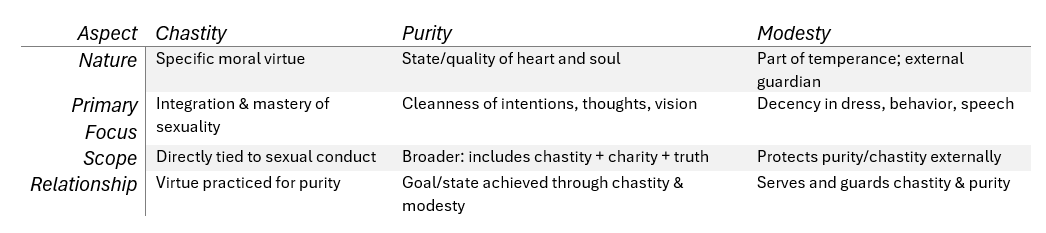
Summary of Differences
In practice:
Chastity orders your sexual desires internally.
Modesty protects that order through external choices (e.g., how you dress or look at others).
Purity is the resulting cleanliness of heart that lets you see God and love others rightly.
These three work together with God’s grace, prayer, and the sacraments. They are not repressive but help humans live with dignity, freedom, and authentic love as God designed. For the full teaching, read the Catechism of the Catholic Church sections on the Sixth Commandment and the virtues of temperance.

When we apply these virtues to ourselves and others we should be careful not to be judgmental and criticize others.
Jesus taught to avoid being unkind to others, instead being humble and self-aware.
in more modern language …
Matthew 7 1-5 “Don’t pick on people, jump on their failures, criticize their faults—unless, of course, you want the same treatment. It’s this whole traveling road-show mentality all over again, playing a holier-than-thou part instead of just living your part. 12 “Here is a simple, rule-of-thumb guide for behavior: Ask yourself what you want people to do for you, then do it for them. Add up God’s Law and Prophets and this is what you get.”
in traditional language …
Judging Others
7 “Do not judge, or you too will be judged. 2 For in the same way you judge others, you will be judged, and with the measure you use, it will be measured to you.